
Fields Inside Stanton County Property Tax Records
A Stanton County property tax record is a joined trail, not one all-purpose document. The Appraiser values real property each year as of January 1, maintains the property record, and decides taxable status. The Treasurer prepares and collects the bill, maintains current and delinquent tax rolls, and supplies payment information and receipts. Match the parcel or account number, situs, tax year, and legal description before comparing the two sources.
| Record item | Meaning in the tax trail | Official source |
|---|---|---|
| Appraised value | County estimate of fair market value under ordinary open-market conditions | Stanton County Appraiser |
| Assessed value | Appraised value multiplied by the Kansas constitutional assessment ratio | Stanton County Appraiser |
| Taxable status | County determination of whether the property or a class is taxable | Stanton County Appraiser |
| Bill and receipt | Tax year, taxing district, amount billed, payment, and receipt context | Stanton County Treasurer |
| Delinquent status | Unpaid real or personal property taxes carried on the delinquent roll | Stanton County Treasurer |
Remember what a tax record is not. The amount on a bill is not a sale price. It does not prove title, either. For a transfer, the deed at the Register of Deeds is the stronger source. The Appraiser and Treasurer explain the county's value and tax administration instead.
Read the taxing district as closely as the value itself. A Johnson City mailing address, a Manter mailing address, and a rural Stanton County situs can each carry a different mix of city, school, recreation, cemetery, and other units. A receipt proves only that one displayed account and year received a payment. It does not certify that every other year is clear. For a multi-year review, request each relevant statement and receipt. Then build a simple year-by-year ledger.
January 1 Starts Stanton County's Value Record
Annual valuation in Stanton County begins on January 1. That is the date the Appraiser uses to value every parcel. Staff track market trends, inspect property, and maintain the real and personal property record. They also decide taxable status and handle valuation questions and appeals. Local taxing units, not the Appraiser, set the levies. Those levies turn assessed value into the tax bill.
The January 1 date matters when a parcel sells or improvements go up mid-year. Check the value year on each document. A later deed does not mean the annual roll has changed yet. Ask the office for the individual parcel card. The official page does not expose a field-level public card or its update interval.
A full request should cover the owner of record and the mailing and situs addresses. Include the parcel or account number, the complete legal description, property class, land and improvement values, appraised value, assessed value, and taxable-status flags. The county confirms the office maintains all of this but does not publish the card's exact layout. When a field is missing, note the gap rather than filling it from an old bill or a map label.
Kansas Math Behind Stanton County Property Tax
Kansas splits the calculation into pieces. Appraised value, an assessment ratio, assessed value, and the levy are all separate. The state explanation applies the class ratio to appraised value, then multiplies assessed value by mills divided by 1,000. Residential real property is assessed at 11.5 percent. Commercial and industrial machinery and equipment generally sits at 25 percent, while agricultural land is valued on agricultural use rather than by the home-market method.
- Appraised value
- The Appraiser's fair-market estimate for most real-property classes.
- Assessed value
- The amount produced after the constitutional class ratio is applied.
- Mill levy
- The rate applied per $1,000 of assessed value by the parcel's taxing units.
- Tax lien
- A claim tied to unpaid property tax, distinct from the value itself.
Classification can swing the result even when two parcels carry similar market estimates. Test the math with the actual Stanton County property tax account. Skip the rough countywide average.
The state material also keeps agricultural use valuation apart from a standard residential example. Other constitutional classes stay separate too. When checking, copy the class exactly as the county shows it. Confirm the ratio for that class. Then apply the actual levy from the current statement. This approach reveals whether any disagreement comes from physical facts, classification, appraised value, the assessment ratio, or the taxing district. Payment posting is another possible source.
Retrieve a Stanton County Tax Bill or Receipt
The Stanton County Treasurer page is the county's doorway for real and personal property billing, tax information, receipts, and online payment. The page itself does not list the underlying search URL or its exact fields. Keep the parcel identity handy, and use the office route if the link does not produce a usable account.
- Ask the Appraiser for the situs, parcel or account number, legal description, value year, appraised value, and assessed value.
- Use the Treasurer's property-tax information and receipt route, or select Stanton through the Kansas property-tax service.
- Match the tax year and taxing district, then read the billed amount, payment status, and receipt rather than relying on a payment screen alone.
- For a missing year or unclear delinquency, contact the Treasurer and describe the parcel and year in writing.
The statewide service asks you to pick a county first. Then you can pull a property-tax statement before entering any payment details. It takes credit cards and electronic checks, and it adds a third-party service charge. Confirm the current charge in the live checkout before paying.
If online access fails, reach the Treasurer's office by phone, mail, or in person. State the parcel, tax year, and record you need. For a written county request, the Stanton County KORA route sets the initial response deadline. That deadline is the third business day. The county fee schedule lists copies at $0.25 per page. Actual staff time and postage may apply where applicable. Ask for an estimate before authorizing a broad multi-year pull.
The Stanton Treasurer's Online Tax Doorway
The official Treasurer page gathers the county's links for online payment, property-tax information, and receipts.
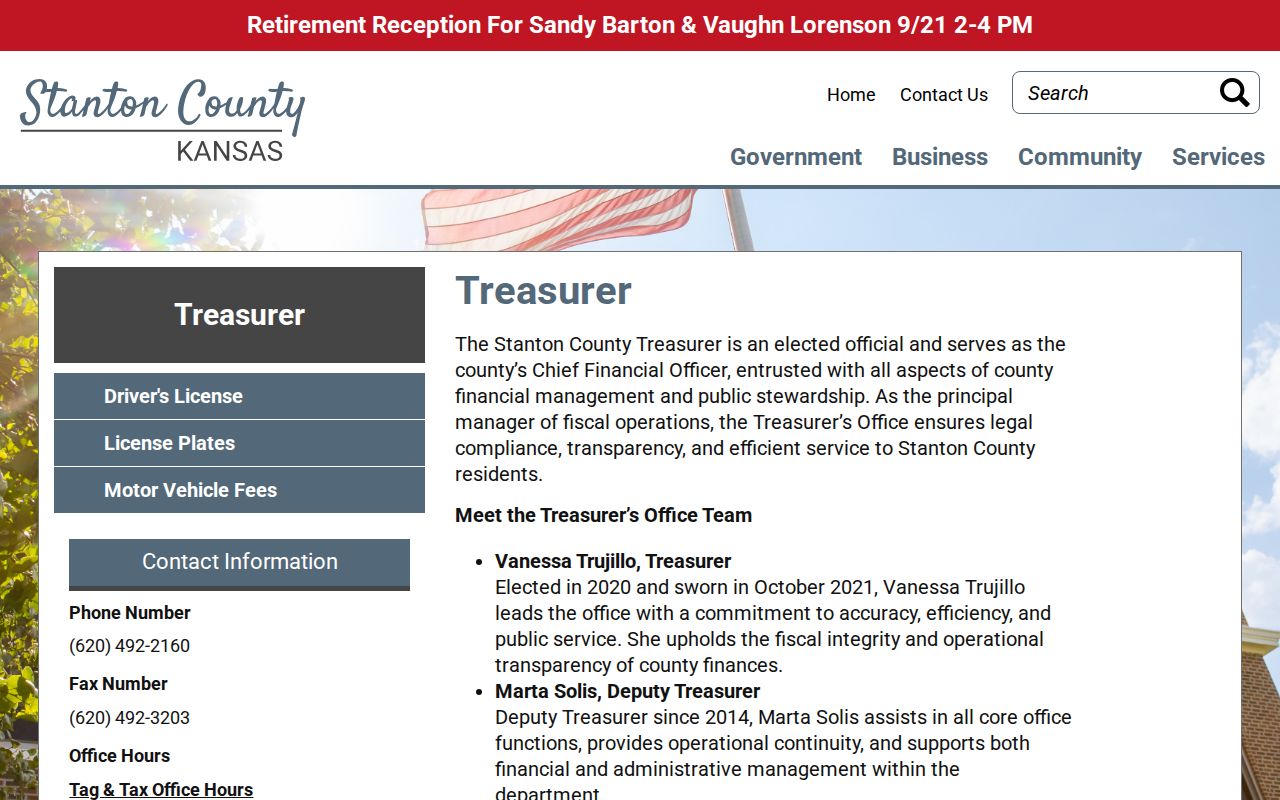
This is a starting point, not a sample parcel result. After following the county link, save the receipt and verify the parcel and tax year shown.
Current and Delinquent Stanton County Tax Rolls
The Treasurer collects current taxes and keeps the delinquent real-estate and personal-property rolls. A delinquent line deserves a year-by-year look. Find out which installment or year went unpaid. Check whether later payments posted and whether costs were added. The County Attorney runs the annual tax sale as an official duty, yet a delinquent marker alone never proves a sale happened.
Ask the Treasurer directly for the current balance and receipt history when a purchase, estate, or closing hangs on it. Then check recorded instruments separately. Stanton County property tax records show account status. Deed and lien records in the Register's office answer different questions about title and encumbrances.
Keep the statement and receipt together. A payment confirmation should match the property, the payer, the amount, and the tax year. The current Treasurer record shows what remains due. If a delinquent account may have entered the annual tax-sale process, verify its status with the Treasurer and the County Attorney. Never infer it from an older list.
Stanton County's 2023 to 2025 Totals Need Year Labels
Stanton County's official summaries put total assessed valuation at $48,587,106 for 2023, $38,841,216 for 2024, and $34,948,615 for 2025. Taxes to collect were $9,553,944, $8,905,760, and $8,697,804 across those same years. These are countywide aggregates, not a trend line. No single house, field, or business parcel follows them.
Read the parcel, not the headline. A shift in county totals cannot establish that one Stanton County property gained or lost value.
Follow one parcel instead. Pull successive parcel cards or valuation notices. Keeping the class, the land-and-improvement split, the tax year, and the taxing district constant prevents countywide oil, gas, agricultural, or personal-property changes from masquerading as a single property's movement.
Johnson City and Manter Tax Districts Differ
The 2024 summary lists a total levy of 252.883 mills for Johnson City. Manter's total is 332.064 mills. Both figures come after the listed state, county, school, recreation, cemetery, city, and other components. Manter's combined city component reaches 110.056 mills. Johnson City's sits at 38.300 mills. Treat the numbers as geography checks, not permanent rates.
When two Stanton County tax bills differ more than expected, verify the city limit, the school and special districts, the property class, the assessed value, and the tax year first. A mailing city or ZIP never establishes the parcel's taxing district by itself.
Revenue-Neutral Notices Add Levy Context
Stanton County's Clerk publishes the revenue-neutral-rate process. A taxing subdivision that wants to exceed its revenue-neutral rate must hold a hearing and publish or mail notice on the Kansas schedule. The process explains a proposed levy decision. It does not change the Appraiser's parcel value or replace the Treasurer's final bill.
Note the taxing unit, hearing, rate, and budget. Then go back to the parcel account. Keep notice, valuation, and bill separate. A property tax review becomes much easier to audit that way.
The county RNR page helps when a tax increase gets blamed on one cause. Compare appraised values, ratios, and final levies. A revenue-neutral notice covers the taxing unit's proposed revenue and hearing process. Never quote it as a parcel valuation or as proof of a final balance.
Challenge a Stanton County Valuation on Time
The Kansas property-tax calendar puts the first conversation with the county Appraiser right after the valuation notice. Filing dates vary by notice and procedure. Trust the date printed on the current notice, not an old calendar. A payment posting or delinquent amount belongs with the Treasurer instead. That is not a valuation appeal.
The Kansas Department of Revenue appeal guidance describes the county-appraiser-first route and the later review options. Bring the parcel record, photos, measurements, and market evidence. Say plainly which fact or valuation judgment you dispute.
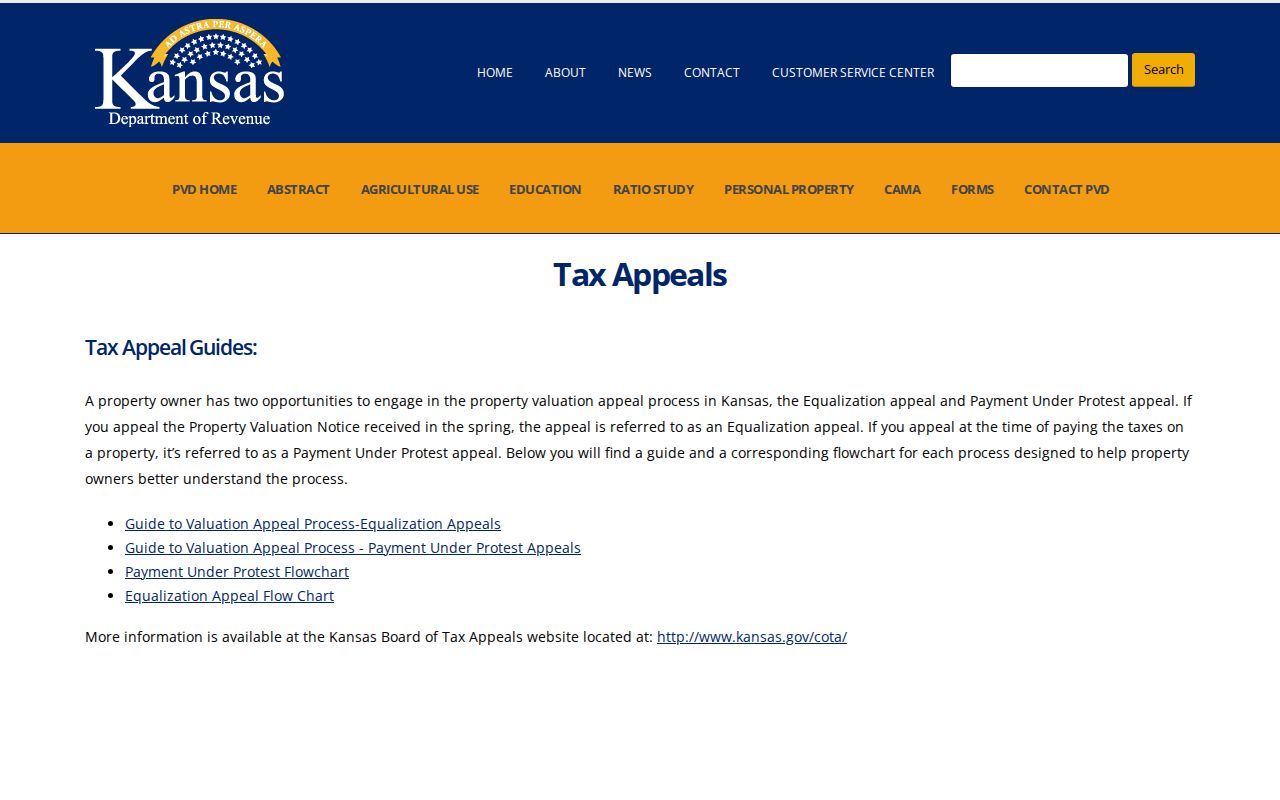
The current valuation notice still controls the parcel's deadline.
Do not wait. Contact the Stanton County Appraiser as soon as the notice arrives and preserve the notice date, evidence, and appeal record.