
Trace Previous Stanton County Owners Backward
Work the transfer chain in reverse. Take the newest deed first. Its grantor is the prior owner. Now find the instrument where that grantor once stood as grantee, receiving the same land. Keep the legal description beside every name, because a street address can change while lot, block, addition, or section-township-range language keeps the parcel steady.
| Transfer point | Grantor to grantee | Instrument | Reference to record |
|---|---|---|---|
| Newest confirmed transfer | Prior owner to current grantee | Read the deed type as filed | Recording date and book/page or instrument number |
| One step earlier | Earlier owner to the newest deed's grantor | Match the acquisition deed | Same legal description or a documented parcel change |
| Estate or court handoff | Decedent, estate, sheriff, or authorized representative | Probate-related or court-related deed | Deed reference plus case file when needed |
| Older book era | Names found in the reverse index | Deed book, plat, or microfilm | Volume and page supplied by the custodian |
Treat this as a working model, not a real chain. Fill each row from the Stanton County Register of Deeds.
Use Each Grantee as the Next Stanton Grantor
Move one recorded instrument at a time. Ask first for the newest deed tied to the parcel. Next, copy the grantor, grantee, recording date, deed type, legal description, and reference. Then search that grantor as a grantee in an earlier period, and compare land descriptions closely before accepting a match. Note any split, combination, replat, dedication, or vacation. Then repeat until the chain runs out.
- Grantor
- The party that transferred the interest stated in a deed.
- Grantee
- The party that received the stated interest.
- Reverse index
- An index organized to find a receiving party and move toward an earlier acquisition.
- Chain of title
- The linked sequence of recorded instruments affecting the same land.
- Quitclaim and warranty deed
- Different forms of conveyance whose legal effect must be read from the actual instrument.
Note: A shared surname proves nothing on its own; demand a matching land description and a valid recording reference.
Stanton's Online Deed Cutoff Is Not Published
The county allows inspection at the office. Yet it posts no public grantor-grantee search page and no online start year. No cutoff is published, so do not assume one. Call the Register at (620) 492-2190 or visit 201 North Main Street in Johnson City. Bring names, a date span, the deed type, and the legal description. Staff can say which index, imaged system, deed book, or microfilm covers your years.
No verified web cutoff. Older Stanton County owners may require office indexes, deed books, microfilm, plats, and archive work because no online coverage year is published.
Written requests go through the county KORA route. The first response is due by the third business day. Copies run $0.25 per page under the county fee document, plus actual staff time and postage.
Follow Stanton Legal Descriptions, Not Old Addresses
Addresses drift, especially along rural routes, highways, city edges, and small-town street changes. Carry the full legal description backward from the current instrument. Johnson City and Manter deeds often use lot, block, and addition language. Rural land leans on section-township-range descriptions instead. When an addition or replat enters the chain, ask for the recorded plat.
The ORKA gateway can orient the tract. But it centers on valuation and settles neither title nor a surveyed boundary. If a map and a deed disagree, keep both references. Then ask the Register or Appraiser to reconcile the parcel identity.
Probate Can Explain a Missing Stanton Transfer
A buyer-to-seller sequence can snap. An owner may have died, or a court authorized the transfer. Search the Kansas district court system for the probate or civil case. Match that case to any executor, administrator, sheriff, or other recorded deed. The case supplies the authority; the recorded instrument moves the land into the county chain.
The Kansas case-search portal gives guest access to basic case details. Older or migrated material may sit only on the courthouse terminal. Adoption, juvenile, expunged, and other protected matters stay limited. Pull only the case that explains the property event.
Stanton's 1873 and 1887 Dates Shape Older Research
Stanton County dates from 1873 but was organized in 1887. An early land claim can therefore lead into state, territorial, neighboring-county, or later Stanton custody. Confirm the source before calling any volume the first county deed book. The Register can identify surviving local indexes. The Kansas Historical Society points toward archival county references. View the Kansas Historical Society Stanton County page for leads on county history. It also covers newspapers, censuses, and related holdings.
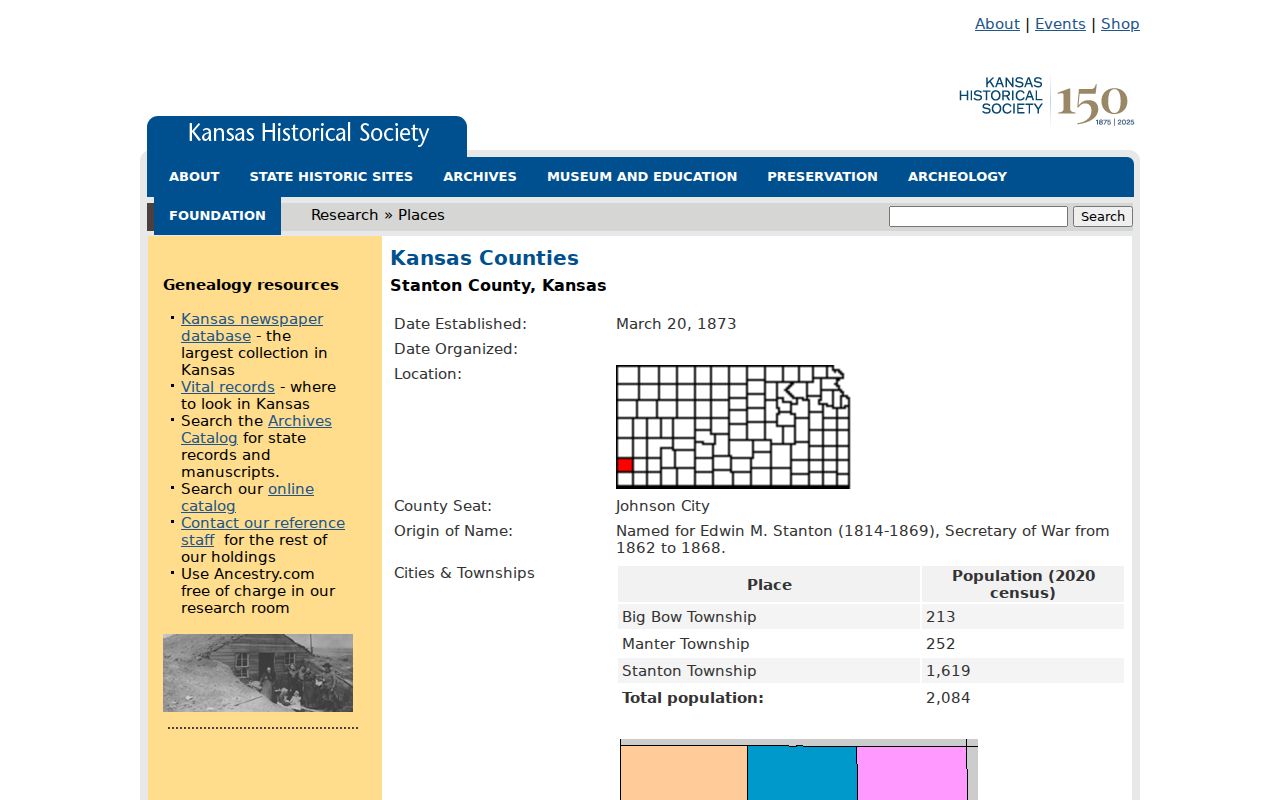
State history routes can name the next collection. Names found there still need confirmation in deeds, plats, or probate records before they count as ownership.
Original Town Plats Preserve Stanton Ownership Clues
The county publishes no online roster of Johnson City or Manter additions. Ask the Register for the original town plat and recorded additions. Copy each exact plat name and reference. Compare lot and block labels to each deed. A vacation, dedication, or replat may explain a change in the legal description. The physical site stays put while the paperwork shifts.
Photographs, maps, and newspaper clippings can reveal former street names or buildings. The Stanton County Museum at 201 North Main may add that human context. Treat a caption or oral history as a clue, though. It is not proof that the named person held title.
Confirm Every Former Stanton County Owner
Close the timeline by testing each link. Every entry needs a full land identity. Include both parties where the instrument calls for them. Add a date, a deed type, and a recording reference you can pull again. Log mortgages, releases, mineral leases, easements, and affidavits on a separate list. None of those convey ownership. Sales Validation Questionnaires and military discharges carry access restrictions. Those should stay apart from ordinary open deed records.
For copies of one instrument, the Stanton County deed records guide explains the process. A plain copy documents research. A certified copy serves a different purpose. Neither copy is a title opinion. An unrecorded interest can fall outside the public chain.
Keep a Stanton Ownership-History Evidence Sheet
Build one row per claimed prior owner. Each row holds the exact indexed name, grantor and grantee roles, deed type, execution date, and recording date. Add the book and page or instrument number, the complete legal description, and a source for every fact. Newspaper names and family stories are clues. So are census entries and photographs. Each stays tentative until a deed or probate record ties the person to the land.
Track land changes on their own lines. A parent tract can split. Lots can combine. Logging the instrument or plat that explains a changed description, before continuing backward, keeps the timeline from leaping to a different tract that merely shares an address or surname.
Keep separate lines for deeds, mortgages, releases, easements, oil-and-gas leases, assignments, and affidavits. Only a transfer instrument counts as a conveyance. The surrounding filings still earn their place. They pin down dates, capacities, and interests that sharpen the history.
Mark gaps openly. Suppose the office index stops before the target year. Note the last verified transfer, then ask which deed book, reverse index, or microfilm continues the series. When an estate intervened, record both the case reference and the later deed. If an old address will not match, keep every version and work from the plat or rural description, which keeps the boundary between evidence and inference visible.
Keep office correspondence with the timeline. A staff note about index coverage, missing years, or a changed reference explains why the search moved to another source. That note lets a later reviewer repeat the work.
\n